Last updated November 22, 2026
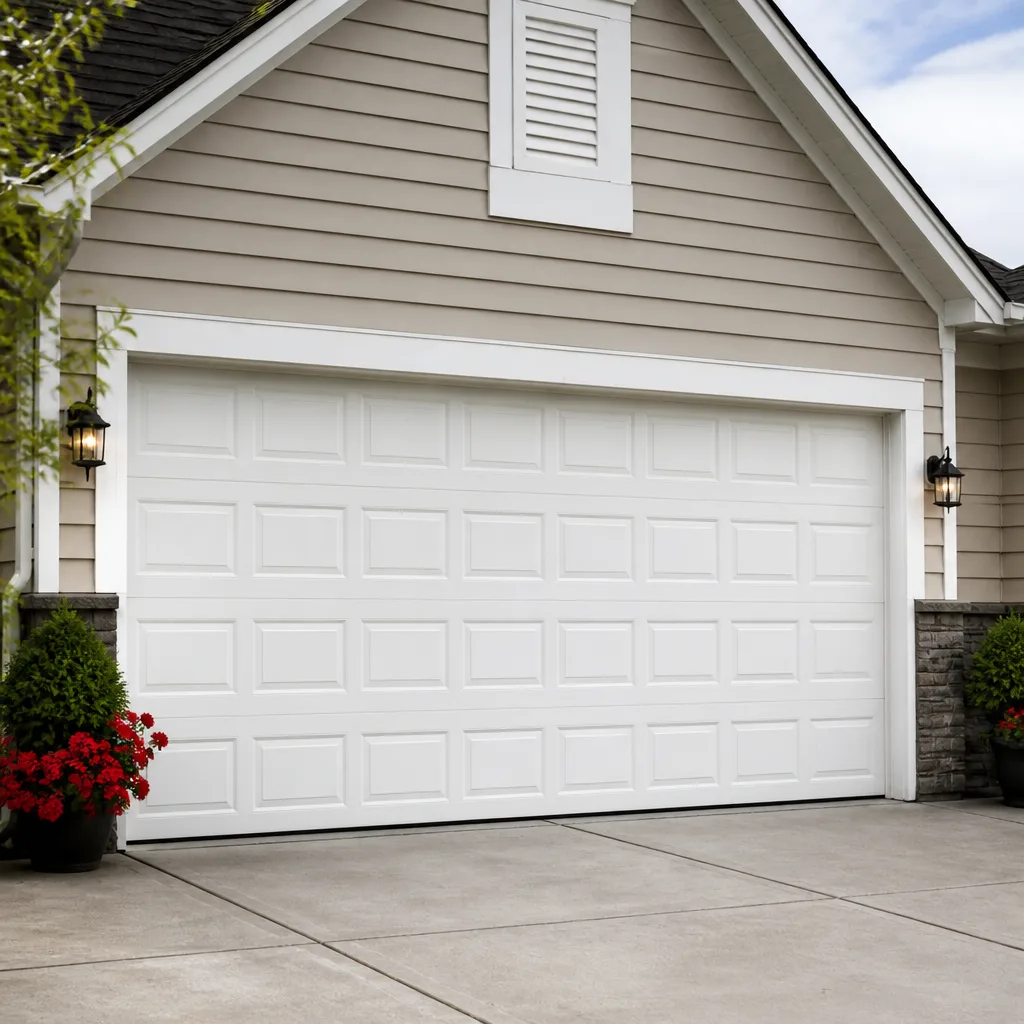 Raised-panel steel
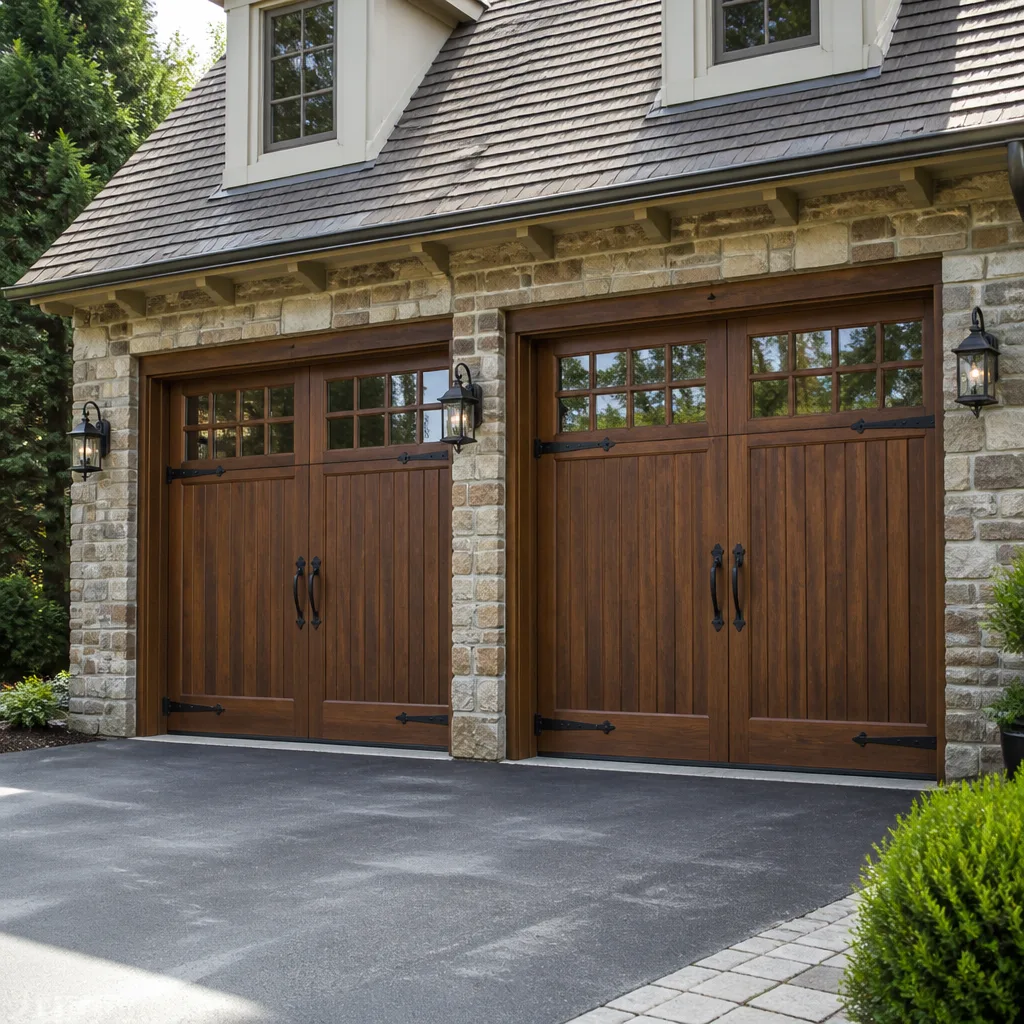 Carriage house
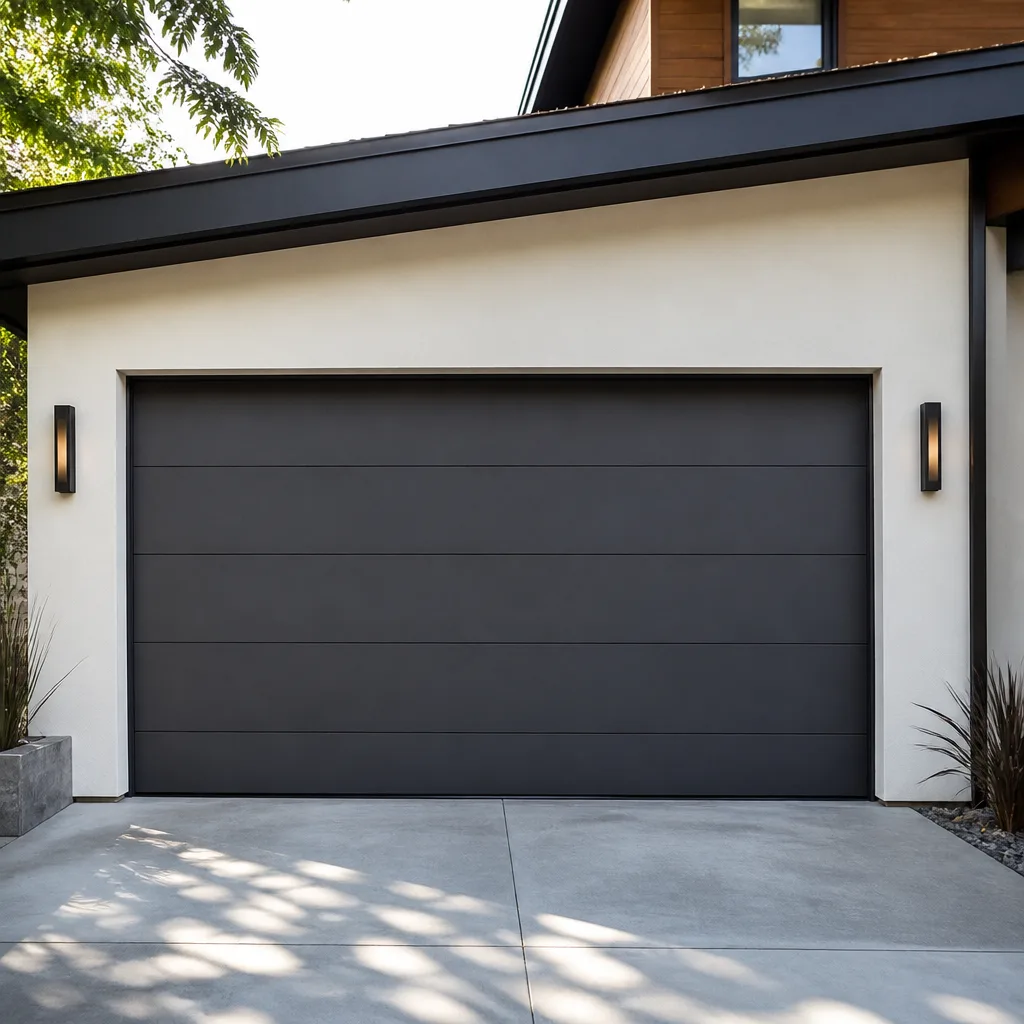 Modern flush
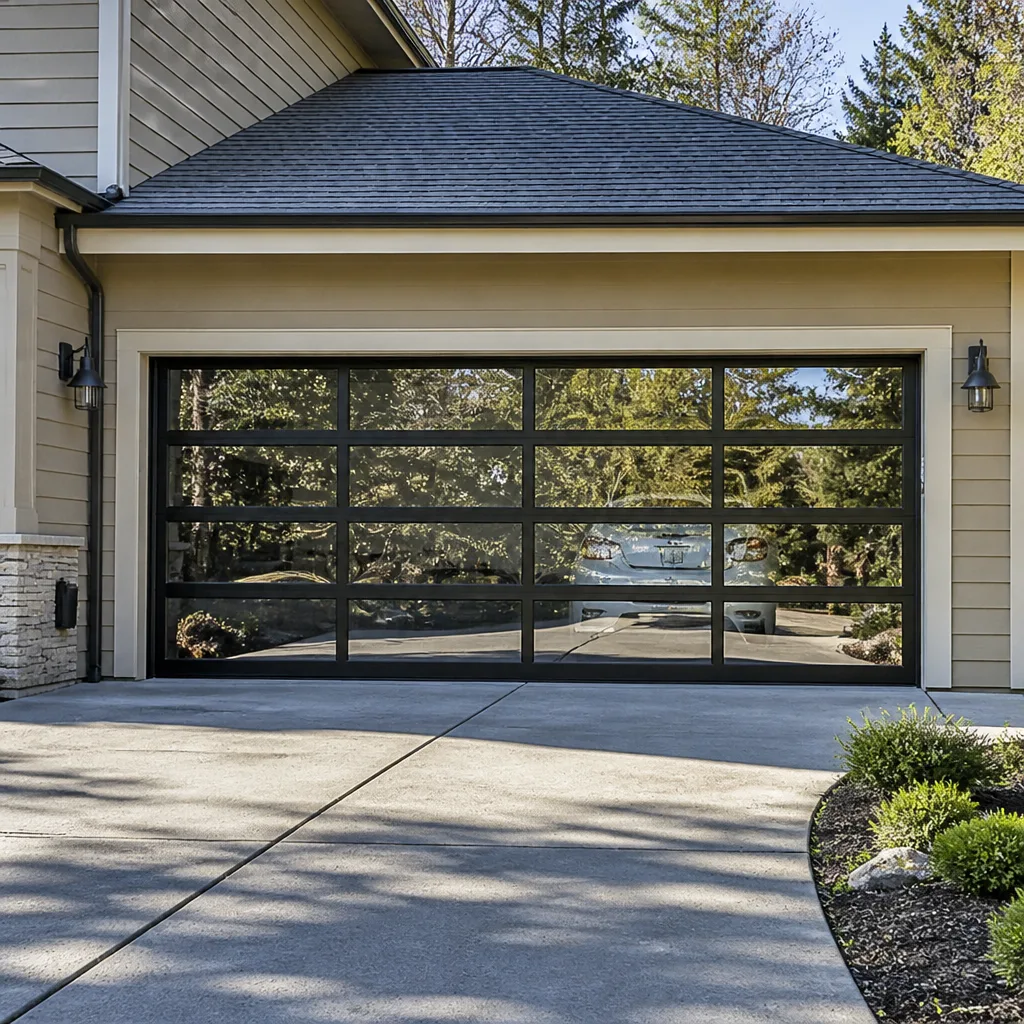 Full-view glass
 LiftMaster openers
 Chamberlain openers
Full 25-point door and opener safety check with every visit - springs, cables, rollers, tracks, and your LiftMaster or Chamberlain opener included
You get a price before we start. It does not change when the pro arrives.
Get your free estimateGarage Door Repair Maintenance Checklist for Palm Coast Homeowners
Most maintenance checklists are written for a generic climate that doesn’t exist. They assume four seasons, hard freezes, and a long winter rest. Palm Coast doesn’t work that way. Here, the door works in heat and humidity nearly every month of the year, the sand gets everywhere, and the parts that fail first aren’t the ones most guides lead with. A torsion spring rated for a long service life assumes a dry, steady climate. Put it in a humid Florida garage and the math changes – corrosion starts earlier, lubrication dries out faster, and the logic board on your opener faces heat cycling that northern installers never plan for. So this checklist is sequenced by what actually fails first on Palm Coast doors, not by what’s easiest to write about. Read it once, then keep it as a reference for the year.
Quick Answer
A proper garage door maintenance routine for Palm Coast means checking the balance and springs monthly, lubricating moving parts every three months instead of once a year, clearing sand from the bottom seal and tracks after it blows in, and inspecting the opener’s logic board and connections as summer heat builds. Do the quick visual checks yourself and bring in a trained technician for spring tension, cable, and opener repair. Homeowners who follow a season-indexed checklist in Palm Coast catch most failures before the door stops working.
Styles & brands we work with
- Raised-panel steel
- Carriage house
- Modern flush
- Full-view glass
- LiftMaster openers
- Chamberlain openers
Table of Contents
- Why Palm Coast Doors Wear Differently
- The Monthly Checks: The Five-Minute Walkaround
- Lubrication on a Florida Schedule
- Corrosion Checkpoints, Ranked by Failure Frequency
- Bottom Seals, Weatherstripping, and Sand Infiltration
- Opener Care and Heat Cycling
- The Season-Indexed Checklist
- What a Professional Service Covers
Why Palm Coast Doors Wear Differently
Garage door hardware is built to a cycle count – the number of open-and-close cycles a spring or bearing is rated to survive. What most product sheets don’t emphasize is that the rated number assumes ideal conditions. Humidity, temperature swings, and airborne grit all shorten real-world life. Palm Coast delivers all three.
The heat is the first factor. A garage in Palm Coast can get hot enough through a summer afternoon that lubricants thin out and run off the moving parts they’re supposed to protect. Once a lubricant migrates away from a hinge or roller bearing, metal contacts metal, and wear accelerates from that point. The same heat puts stress on the opener electronics sitting in that garage.
Humidity is the second. Warm, damp air hangs around steel hardware long enough for surface corrosion to set in on springs, hinges, and roller bearings. Corrosion does two things: it eats into the metal and it changes how smoothly the part moves. A torsion spring with surface pitting can keep working while it quietly weakens.
The third factor is sand. Palm Coast sits on sandy ground, and the grit finds its way into tracks, rollers, and the bottom seal. Sand acts like a very fine abrasive between moving surfaces. It doesn’t break anything on its own, but it speeds up the wear that heat and humidity already started.
Put those together and the practical takeaway is simple: a Palm Coast door needs attention more often than a once-a-year northern routine. In our experience working on doors across Palm Coast, the homes that follow a tighter schedule go far longer between major repairs than the ones that remember maintenance only when something breaks. The rest of this guide works through the checklist in the order things tend to fail.
The Monthly Checks: The Five-Minute Walkaround
A quick monthly inspection catches most problems while they’re still cheap and easy to fix. You don’t need tools for most of it. Do this walkaround the same time each month and note anything that changes from the month before.
- The balance test. Open the door fully by hand and stop it halfway. If it stays where you let it go, the balance is roughly right. If it drifts down on its own or needs a shove to climb, the springs or cables are out of adjustment – stop opening and closing it and call for a look.
- Listen for noise. A quiet door is a healthy door. Grinding, squealing, or a sharp pop on each cycle points to worn rollers, dry hinges, or a spring problem.
- Watch the travel. Open and close the door and watch it track. It should move evenly without shaking, jerking, or pulling to one side. A door that shudders is telling you something is binding or worn.
- Look at the tracks. Check for grit, buildup, or anything loose. Palm Coast sand settles into the tracks; a light brush-out keeps it from turning into a paste against the rollers.
- Check the sensors and safety reverse. With the door open, break the sensor beam with your leg – the door should not close. Repeat monthly so a failed safety feature doesn’t go unnoticed for a season.
Write down what you find. A small change in noise or balance from one month to the next is useful information when you decide whether to call for a professional inspection. If your door is a LiftMaster or Chamberlain unit, note the model and any flashing error codes you see on the opener – it saves time on the diagnosis.
Lubrication on a Florida Schedule
Manufacturer lubrication specs are a starting point, not a Palm Coast answer. Those intervals are written to cover a range of climates on the assumption of moderate humidity and normal temperature swings. Here, the heat thins lubricants faster and the humidity makes the formulations break down sooner. We recommend lubricating the moving parts about every three months rather than once a year – the tighter interval fits the local conditions.
The choice of lubricant matters as much as the interval. A few practical guidelines:
- Use a lithium- or silicone-based lubricant on hinges, rollers, and the torsion bar. These hold up in heat better than light oils, which thin out and drip away in a hot garage.
- Skip WD-40 as a long-term lubricant. It’s fine for loosening a stiff part or displacing moisture, but it doesn’t provide lasting lubrication and it attracts dust. A dedicated garage door or lithium grease does the job the door needs.
- Avoid over-greasing the tracks. The tracks are a rolling path, not a bearing surface. A light wipe-down is enough; heavy grease in the tracks turns into a grit magnet with Palm Coast sand blowing in.
- Keep lubricant off the opener’s drive belt or chain in excess. A little is fine on the chain; a belt should stay mostly dry.
The parts to hit each time are the hinges, the roller stems, and any pivot points on the door. The torsion spring itself gets lighter treatment – a thin coat helps resist corrosion, but the spring’s real safety work is tension, not lubrication.
Springs, cables, and bottom brackets carry stored tension even when the door is closed. Never loosen, adjust, or remove any of these parts yourself. Spring work is a trained-technician job, and the same is true for the cable winding. If you’re unsure whether your springs need attention, a professional inspection is the safe route.
Corrosion Checkpoints, Ranked by Failure Frequency
In a humid climate, corrosion is a slow, steady threat. Since a spring that would last a long time in a dry climate can show real wear much sooner here, it pays to know where to look and which parts fail first. Here’s the ranking we’ve found most useful in Palm Coast, from the parts that show corrosion problems most often to the ones that are lower priority.
- The torsion spring. High-tension steel with a thin protective coating, exposed to humidity every day. Surface pitting or flaking paint is a reason to have it inspected, not ignored.
- Hinges. The pivot points collect moisture and grit, and the pin-to-plate surfaces are prime corrosion spots. A stiff hinge that squeaks under stress is often a corroded hinge.
- Roller stems and bearings. These sit low where grit and moisture concentrate. A roller that has stopped turning smoothly is dragging on the track and wearing both parts.
- Cables. The steel strands can develop corrosion that reduces strength, and cable failure is a dangerous event. Any fraying, kinking, or corrosion on the cable is a call-a-professional situation.
- The bottom brackets and fasteners. Hardware near the ground sees the worst of the damp and grit. Loose or corroded fasteners should be replaced, not tightened and left.
When you check for corrosion, look for flaking paint, orange-brown surface rust, or a gritty feel on moving parts. If you find it on a spring or cable, treat that as a stop-and-call. If it’s on hinges or rollers, a professional can replace the affected parts and get the door back to smooth operation.
The doors we see with the fewest corrosion issues are the ones where the owner keeps up lubrication and calls for a spring or roller check on a regular schedule. It’s not about the parts being better; it’s about not letting the slow wear get a head start.
Bottom Seals, Weatherstripping, and Sand Infiltration
The bottom seal is one of the most overlooked parts on a garage door, and in Palm Coast it does more work than most homeowners realize. The seal is what keeps sand, dust, water, and pests out of the garage. When the seal dries out, splits, or pulls away from the door, you get a gap along the floor that lets in the fine sand that’s everywhere here.
Here’s how to inspect it:
- Close the door and look at the gap. Daylight or a visible line of light under the door means the seal or the floor isn’t doing its job.
- Run your hand along the seal. It should feel soft and flexible. If it’s hard, cracked, or crumbling, it needs to be replaced.
- Check the sides and the top. Weatherstripping around the door frame seals the sides and top. Look for gaps, peeling, or compression that no longer makes contact.
- Clear the sand. After a windy stretch, sand can pile up along the seal and the track base. Brush it out so it doesn’t get pushed into the door’s moving parts on the next cycle.
Replacing a bottom seal is a straightforward job, and it’s one of the cheapest ways to keep sand and moisture out of the garage. It also protects the door and track from the grit that causes premature wear. If you’re already having a technician out for spring or opener work, ask whether the seal and weatherstripping are still doing their job – it’s a small addition to a bigger visit.
While you’re near the ground, check how the bottom of the door meets the floor. A worn seal on a slightly uneven floor can let sand sneak in even when the seal itself looks intact. The fix is a fresh seal cut to fit the door.
Opener Care and Heat Cycling
Your garage door opener is an electronic device living in a hot room. In Palm Coast, the afternoon heat pushes the opener’s logic board and motor through regular temperature fluctuations, and those cycles can cause intermittent failures that are hard to pin down. A door that opens fine in the morning and hesitates at the hottest part of the day is telling you the heat is part of the story.
What to watch for and what to do:
- Intermittent no-shows. If the door sometimes doesn’t respond to the remote or wall button, note the time of day and temperature. A pattern tied to heat points to the electronics or a loose connection.
- Flashing error codes. Modern openers from brands like LiftMaster or Chamberlain show error codes with an LED light pattern. Write them down for a professional. It narrows the diagnosis quickly.
- Loose or corroded wiring. Heat and humidity can work on wire connectors over time. A professional can check the terminals and connections for tightness and corrosion.
- Keeps the photo-eye path clear. Since the opener relies on the safety sensors, a bit of sand or a spider web across the lens can produce symptoms that look like an electronics failure.
Different openers need different care. A smart Wi-Fi opener and an older Craftsmans chain-drive unit are not the same animal, and the diagnosis changes based on what’s in your garage. That’s why we work on your brand when we come out – the right answer for a Genie unit isn’t always the right answer for a Raynor system. If your opener’s hiccups keep coming back, it’s worth a proper look rather than guessing at a reset.
Never open the opener’s housing or probe the wiring yourself while the unit is powered. The electronics can carry a charge, and the opener is connected to a moving door. Call a trained technician instead; diagnosing the board is a job for someone who knows the model.
The Season-Indexed Checklist
A flat list of maintenance tasks treats every month the same. Palm Coast weather doesn’t. A spring-into-summer push, a hot and humid summer, and a transitional fall all put different stresses on the door. Here’s how to index the checklist to the local year.
Spring (March-May)
- Check the springs’ appearance. After a winter of being closed up and exposed to humidity, look for surface corrosion on the springs; call if you see pitting or flaking.
- Do a full balance and travel test. As the door gets used more in the warm months, a binding or imbalance will show up now.
- Replace a worn bottom seal. Get ahead of the sand that will blow in over the summer.
Summer (June-September)
- Lubricate more often. This is the season heat thins lubricant fastest. Re-lubricate the hinges, rollers, and pivot points on the tighter interval.
- Watch the opener for heat-related issues. Note any intermittent response or error codes during the hottest stretch.
- Clear the tracks and seal of sand. Wind and dry ground mean more grit in the tracks; brush them out regularly.
Fall (October-November)
- Inspect the whole door before the cooler months. Check the corrosion checkpoints and look for any damage from the summer.
- Test the safety reverse. It should work cleanly before the door gets daily use into the holidays.
- Check weatherstripping. Replace anything that has hardened or pulled away.
Winter (December-February)
- Run the balance test again. Mild winters still mean daily use, and a worn spring or cable shows up in the balance test.
- Listen for noise. A new squeal or grind is a chance to catch a worn part early.
- Look at fasteners and brackets. Humidity doesn’t take a break, so a quick corrosion check is still worthwhile.
This season-indexed routine fits how the local environment stresses the door. A quick three-month check is the minimum; the tightest schedules in Palm Coast hit all the checkpoints above once a year, with lubrication on a three-month cycle.
What a Professional Service Covers
A maintenance visit from a trained technician covers the parts you can’t safely check yourself, starting with the springs and cables. On a proper visit, here’s what gets looked at:
- Spring tension and condition. The technician checks the torsion or extension springs for proper tension, corrosion, and wear. Adjusting or replacing a spring is a safety-critical job that should not be done by the homeowner.
- Cables and drums. Cables are inspected for wear, fraying, and correct winding. Cable failures are dangerous, and the repair needs proper technique.
- Rollers, hinges, and tracks. Worn rollers get replaced, hinges get lubricated or swapped, and tracks get checked for alignment and debris.
- Opener operation. The technician tests the opener, checks the reversal safety feature, inspects the wiring and connections, and verifies the drive system – belt, chain, or screw – is running properly.
- Seals and weatherstripping. The bottom seal, side seals, and framing get checked for gaps and wear.
The advantage of having a professional look at the whole door at once is that it catches the small things before they combine into a bigger repair. A worn roller might be fine on its own; a worn roller with a slightly corroded hinge on a door that’s starting to go out of balance is a different story.
We cover the full range of the work – from routine maintenance and garage door repair through garage door opener repair and garage door spring repair – so a maintenance visit can roll right into fixing what turns up. That’s the advantage of one provider handling the whole job instead of pointing you to a second contractor. If your door is a model from one of the major brands, we’re set up to work on that brand from the first visit. For the full range of what Palm Coast Garage Door Repair Pros handles, that’s where the details live.
Common Mistakes to Avoid
- Treating the annual Northern routine as enough. A once-a-year lubrication habit was written for a different climate. In Palm Coast, the tighter three-month interval is what keeps heat and humidity from winning.
- Greasing the tracks heavily. A little lubricant on the moving parts is good, but heavy grease in the tracks captures sand and turns into an abrasive paste. Wipe the tracks down and keep the grease on the hinges and rollers.
- Ignoring the bottom seal. The seal is the first line of defense against sand and moisture. A cracked or worn seal lets grit in, and the grit grinds against the door’s working parts all season.
- Diagnosing opener problems from the remote alone. An intermittent opener failure often shows up as an error code or a pattern tied to heat. Note the model and the symptoms rather than just resetting the unit and hoping.
- Testing a spring’s balance with force. If a door drifts or binds in the balance test, don’t try to muscle it back into line. Suspended tension can let go suddenly; call for a professional check.
- Lubricating the springs and calling it a repair. A lubricated spring is still a spring with tension. Lubrication slows corrosion; it doesn’t fix a worn or out-of-adjustment spring.
- Putting off the corrosion checkpoints. Surface rust on a hinge or roller looks minor, but it’s an early warning. Catching it at the inspection stage beats a mid-season failure that leaves a car trapped.
See the difference
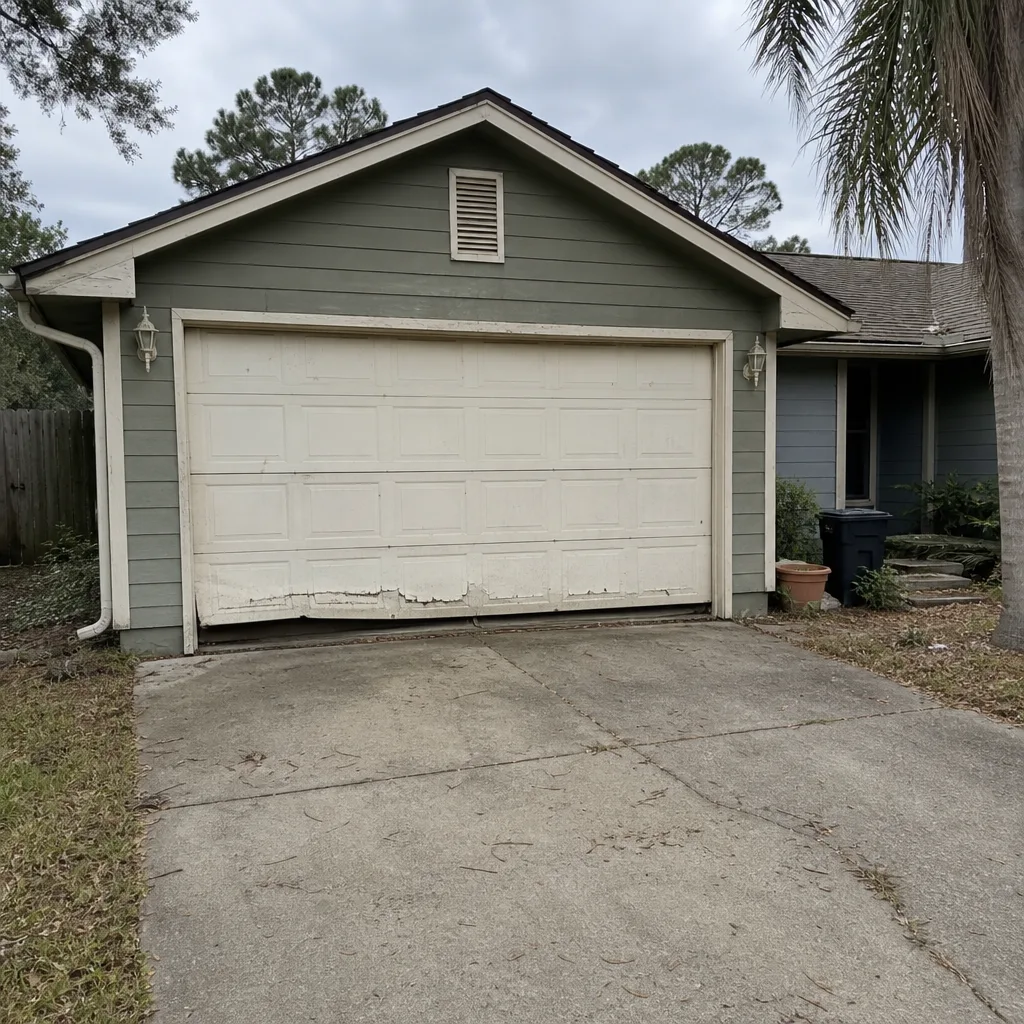 Before
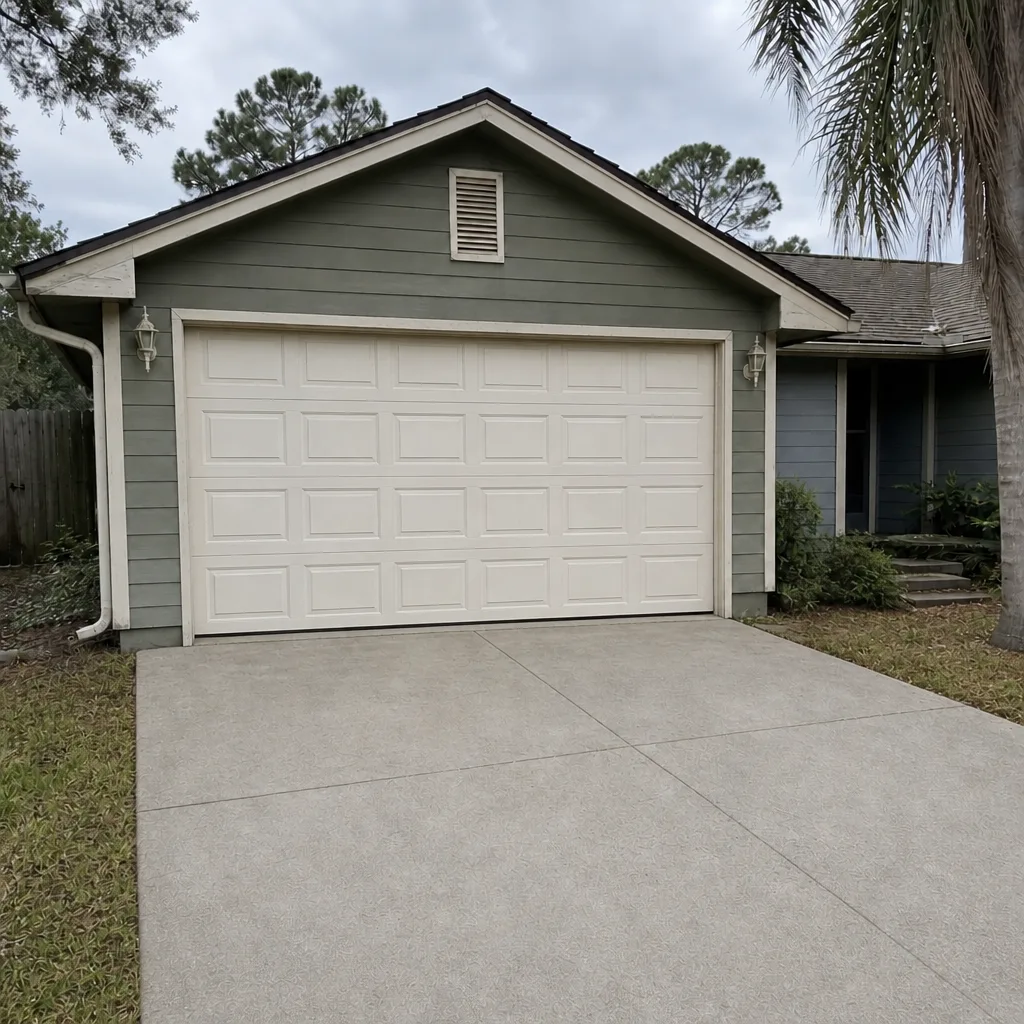 After
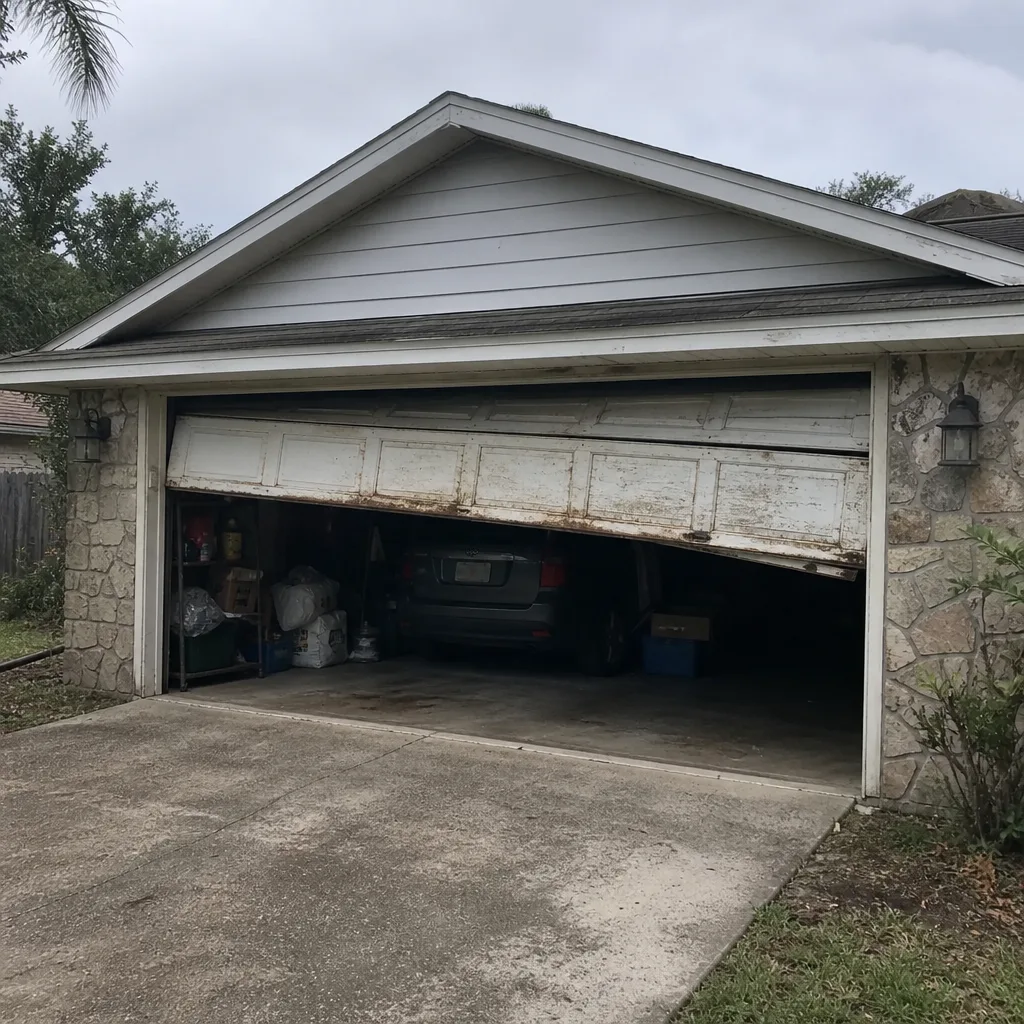 Before
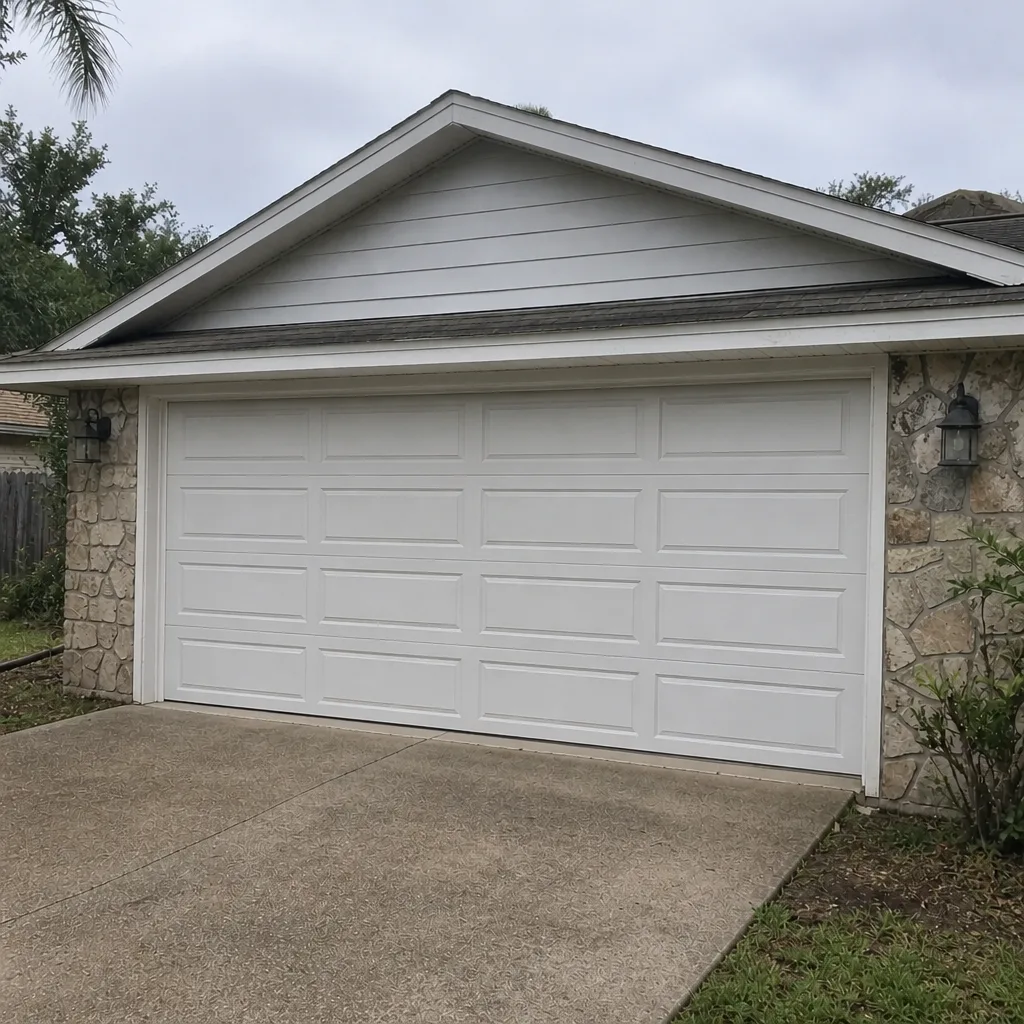 After
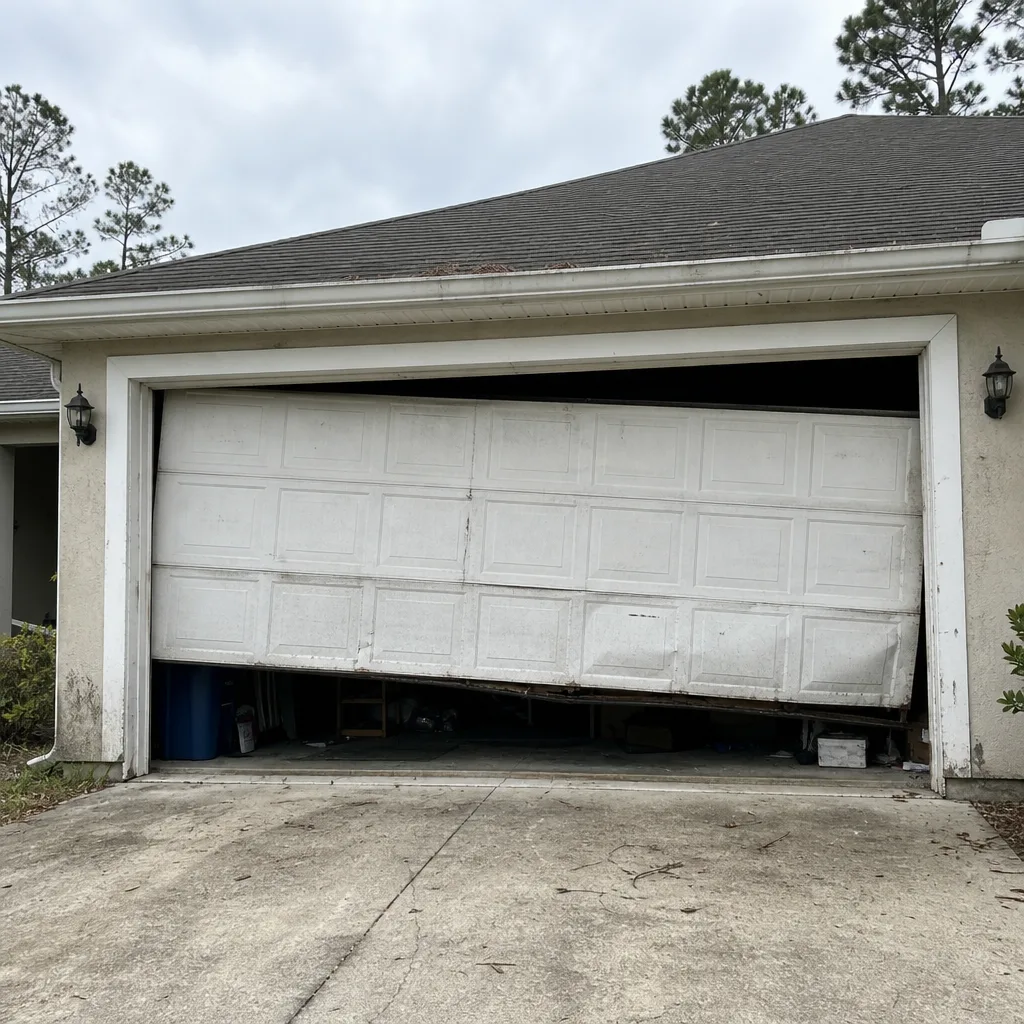 Before
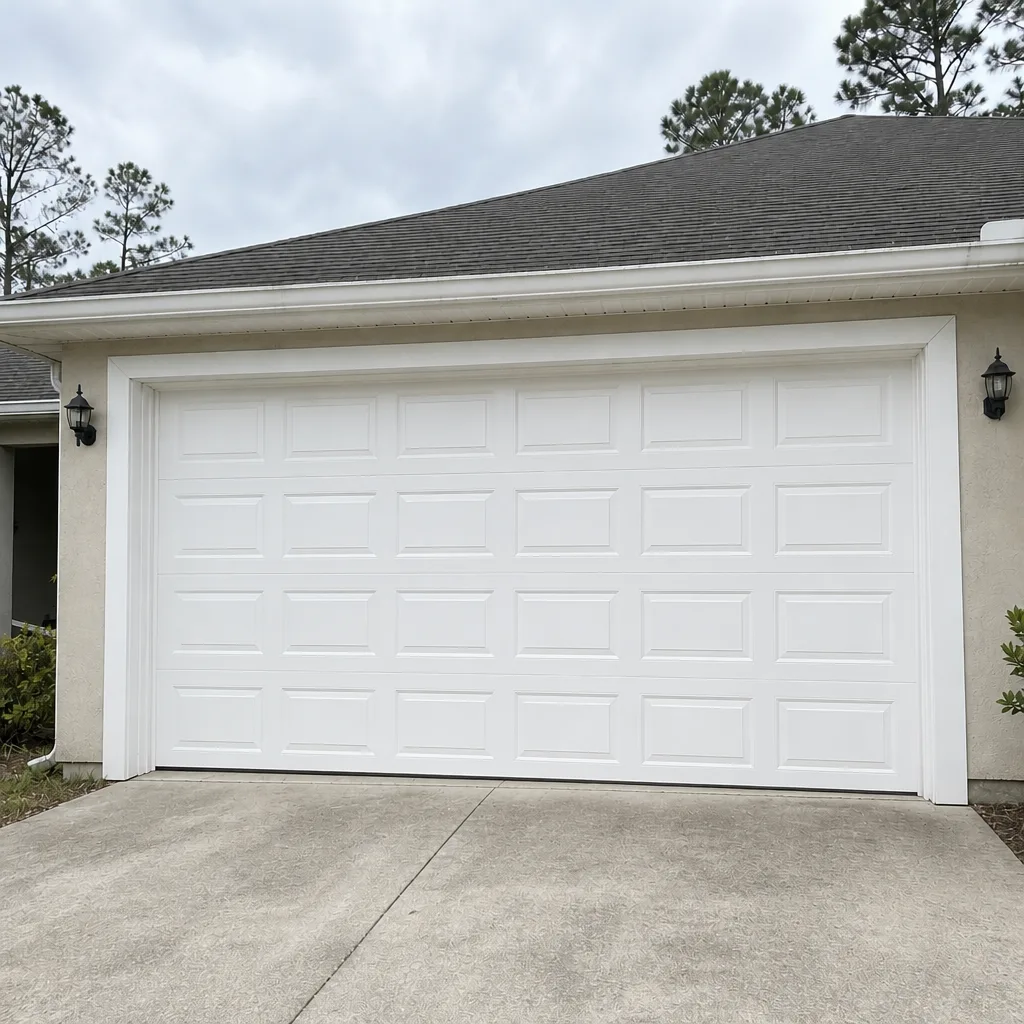 After
When to Call a Professional
Some maintenance is a homeowner’s job, and some isn’t. Call a professional when the balance test shows the door drifting or binding; when you hear a pop, grind, or squeal that wasn’t there before; when you see corrosion, fraying, or kinking on a spring or cable; when the bottom seal is cracked and letting grit in; when the opener hesitates or throws an error code; or when the door won’t close and the garage is left open. Springs, cables, and opener electronics are all safety-critical parts, and a trained technician is the right person for each. Palm Coast Garage Door Repair Pros offers free estimates in Palm Coast – for urgent problems, our emergency service is a core part of what we do, and we’re ready to book a visit as soon as possible. Call (866) 551-8438 to get started.
Frequently Asked Questions
Every three months is the right interval here. The heat and humidity in Palm Coast break down lubricants faster than in cooler climates, so a quarterly routine on hinges, rollers, and pivot points keeps the door moving smoothly. Manufacturer specs often suggest once a year, but the local conditions call for a tighter schedule. Use a lithium- or silicone-based lubricant, not a light oil, and keep heavy grease out of the tracks. Call (866) 551-8438 for a professional lubrication and inspection visit – estimates are free.
Heat cycling is the likely cause. Afternoon temperatures in Palm Coast push the opener’s electronics through repeated stress, and a weak connection or a warming logic board can cause intermittent failures that show up only when the garage is hottest. Note the time of day and any blinking error codes, then have a technician check the opener’s wiring and board. Call (866) 551-8438 to schedule a diagnostic – free estimate, no guesswork.
No. Springs carry stored tension even when the door is closed, and the repair involves releasing and re-tensioning that energy – an injury risk no amount of care removes. This is a job for a trained technician with the right tools and technique. If you suspect a spring problem, stop using the door and call a professional. For spring work across Palm Coast, spring replacement and tension calibration are a core specialty of ours.
Look at the bottom seal first. A seal that’s cracked, hardened, or sitting with a gap along the floor lets the fine sand in, and the grit then works its way into the tracks and rollers. Brush out the tracks regularly and replace a worn seal before the summer wind kicks up. The seal and weatherstripping around the frame are the parts to check first when you find sand in the garage.
Springs are the top of the list, followed by hinges, roller bearings, and cables. The humidity and heat accelerate corrosion on high-tension steel, and the case-by-case wear shows up on the spring well before it would in a dry climate. Corrosion on the hinges and rollers is next, and the cable strands are the part to watch for danger. A professional inspection catches these before they become a bigger repair.
A proper visit covers the parts you shouldn’t handle yourself, starting with the springs and cables. The technician should check spring tension and condition, inspect the cables for wear, test the rollers and tracks, verify the opener’s operation and safety reverse, and look at the seals and weatherstripping. You should come away with a clear picture of the door’s condition, not just a lubrication job. Call (866) 551-8438 to book a visit in Palm Coast – the estimate is free.
The Bottom Line
A garage door maintenance checklist for Palm Coast has to respect the local climate, not a generic one. The core routine is a monthly walkaround for balance, noise, and travel; quarterly lubrication with the right product; a regular check of the bottom seal for sand; a corrosion sweep across the springs, hinges, and rollers; and an eye on the opener’s behavior as the summer heat builds. Index the whole thing to the season and the door sees fewer costly surprises. When a check turns up something on the springs, cables, or opener, that’s the moment to bring in a professional. If you’d rather have it done right than try to remember it all, Palm Coast Garage Door Repair Pros is one call away for maintenance, repair, and emergency service in Palm Coast. Call (866) 551-8438 for a free estimate.
Written by the team at Palm Coast Garage Door Repair Pros.